“Film and the New Psychology: Merleau-Ponty, Dewey and the Objectivity of Emotional Qualities,” presented at Psychology, Emotion, and the Human Sciences, April 20, 2012.
Matthew Crippen
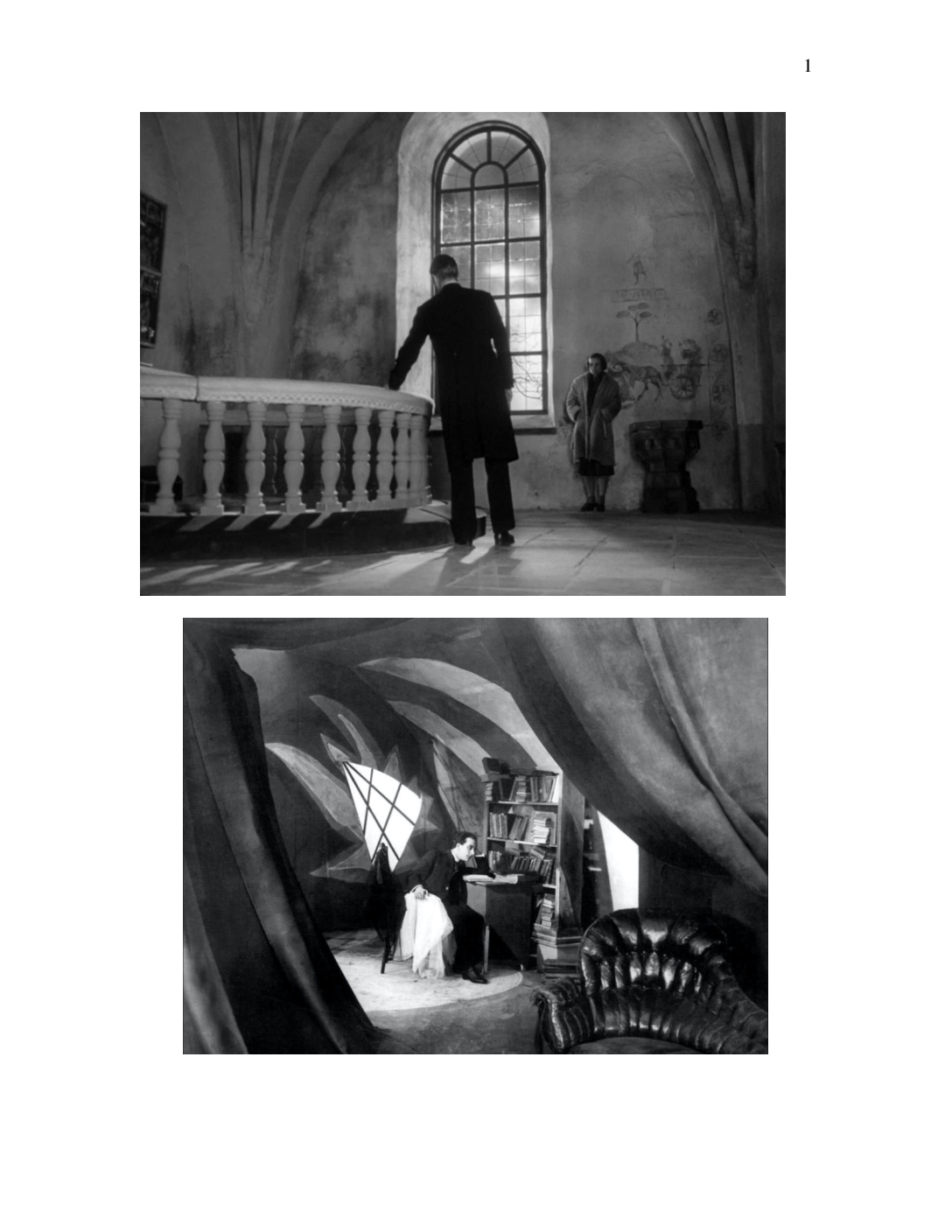
Abstract: Jon Elster suggested that artists sometimes tell us more about emotions than scientific psychologists. I plan to discuss how Maurice Merleau-Ponty and John Dewey— who were recognized as psychologists—came to better understand emotions through art. I will focus on how Merleau-Ponty’s 1947 “Film and the New Psychology” drew insight from an experiment conducted by the filmmakers Lev Kuleshov and Vsevolod Pudovkin, and how his insight clarifies a thesis developed in Dewey’s 1934 Art as Experience, namely, the thesis that worldly situations have objective emotional qualities. We say emotions are “internally” felt, yet also speak of “being in” moods. The merry-making at a Christmas party, for example, constitutes a public emotional atmosphere in the midst of which revelers find themselves. Some present may admittedly be gloomy. However, the point is not that everybody is merry, but that situations have a public emotional atmosphere. Dewey notes that we talk this way. “Situations are depressing, threatening, intolerable, triumphant,” we say (67). Situations contain networks of active relations. If situations have emotional qualities, the latter might be conceived of as qualities or effects of relationships. Merleau- Ponty illustrated this by evoking a famous cinematic experiment: "One day Pudovkin took a close-up of [the actor] Mosjoukin with a completely impassive expression and projected it after showing: first, a bowl of soup, then, a young woman lying dead in a coffin, and, last a child playing with a teddy bear. The first thing noticed was that Mosjoukin seemed to be looking at the bowl, the young woman, and the child, and next one noted that he was looking pensively at the dish, that he wore an expression of sorrow when looking at the woman, and that he had a glowing smile for the child" (54). Psychologists have claimed that facial expressions cannot be faked, so that, for example, security agents might learn to detect forced expressions of friendliness. However, the cinematic experiment suggests something has been overlooked. It is true that Mosjoukin is not completely in charge of what he expresses, yet this is not because his facial muscles involuntarily move. Although this happens in everyday life, it does not happen here since the same shot is always used. Some might dismiss the cinematic effect as an illusion, but the word “effect” suggests another interpretation, especially if we take seriously a pragmatic notion advanced by Dewey, Nietzsche, Peirce and others: that properties are effects of interrelationships, so that, for example, an object’s colour, length and mass are relative to the speed at which it is encountered. Different expressions appear on Mosjoukin’s face in consequence of his placement within objectively different situations or relationships. Such consequences, it is true, can only show up in the presence of observers, who, by virtue of being observers, participate in the network of relationships. However, this is also so with colour, length and mass, and most, excepting philosophers, do not dismiss the appearance of such properties as illusions. By establishing these last points, I hope to reinforce Dewey’s claim that emotional receptivity is “a mode of sense” (30), and that much as colours are qualities of perceptible objects in the world, emotions are “to or from or about something objective” (67).